
 By Kavita Mistry
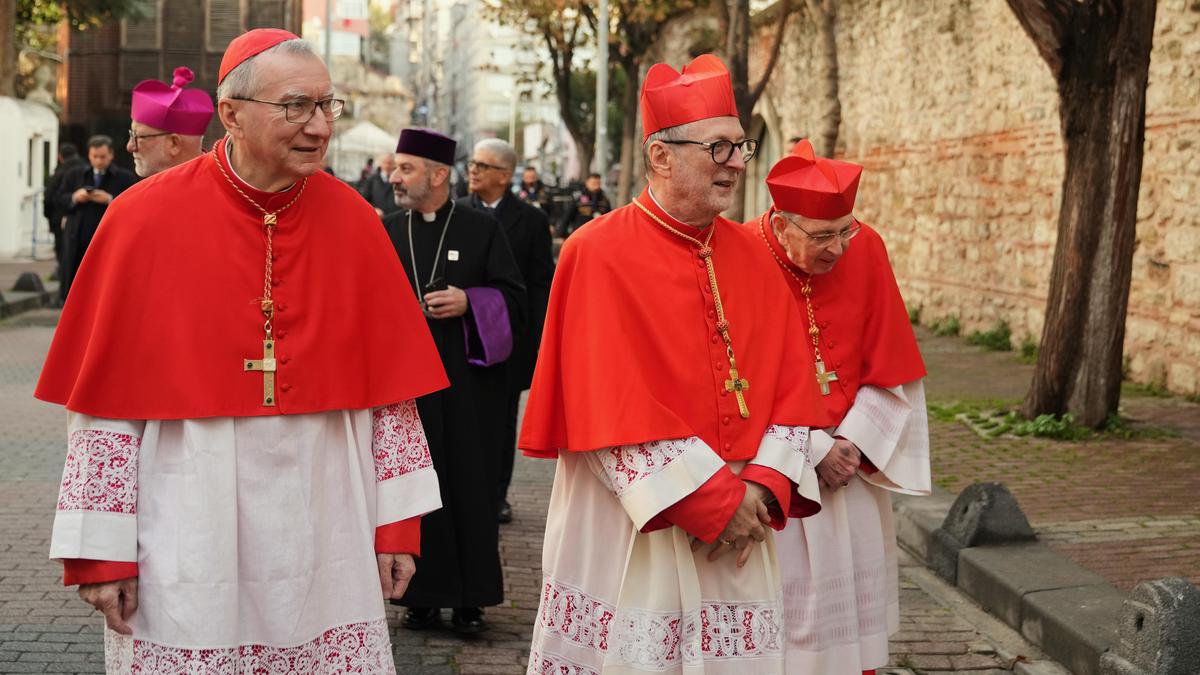
Pope Leo XIV held prayers at the Armenian Apostolic Cathedral in Istanbul on Sunday (November 30, 2025) in a gesture of support for Christian unity and Christian minorities in Turkiye.
Beyond its ecumenical symbolism, the visit signals quiet support of ongoing efforts to heal century-old wounds between Turkiye and Armenia, long scarred by mass killings and decades of mistrust, observers note.
An estimated 1.5 million Armenians died in massacres, deportations and forced marches that began in 1915 in Ottoman Turkiye. Historians widely view the event as genocide.
Turkiye denies the deaths constituted genocide, saying the toll has been inflated and those killed were victims of civil war and unrest. It has lobbied to prevent countries from officially recognising the massacres as genocide.
Influence of Pope Francis lingers
Pope Francis did not visit any Armenian sites during his visit to Turkiye in 2014, but on his way to the airport before departing, he made an unscripted stop at a hospital where the ailing Armenian Patriarch Mesrob II was being treated.
A year later, Francis drew Ankara’s ire by referring to the slaughter of Armenians during the Ottoman era as “the first genocide of the 20th century.” He later visited Armenia, where he again used the term genocide.
Pope Leo has steered clear of controversy during his first six months as pope and on Sunday only made a subtle reference to the sufferings.
“This visit provides me with the opportunity to thank God for the courageous Christian witness of the Armenian people throughout history, often amid tragic circumstances,” he said.
Pope Leo’s visit comes as Turkiye and Armenia appear to be moving closer toward a normalisation of their ties, and the pontiff’s visit is likely to lend support to those efforts, said Richard Giragosian, the founding director of the Regional Studies Centre based in Yerevan, Armenia.
“More than just the symbolic importance of bringing the Vatican closer to the Armenian Church in terms of the eastern religion outreach, (the visit) is also, in some ways, promoting Armenia-Turkish normalisation,” Giragosian said.
Pope Leo arrived in Turkiye on Thursday on his first foreign visit to mark the 1,700th anniversary of the Council of Nicaea, now the town of Iznik, where the united Christian Church agreed on a shared creed of faith. He was then scheduled to continue to Lebanon.
The Armenia and Azerbaijan conflict plays a role
Turkiye and Armenia have no formal diplomatic ties, and their border has remained closed since the 1990s. In 2021, the countries agreed to work toward normalisation, appointing special envoys to explore steps toward reconciliation and reopening the frontier.
Those talks have progressed in parallel with efforts to ease tensions between Armenia and Azerbaijan, a close Turkish ally. Turkiye supported Azerbaijan during its 2020 conflict with Armenia for control of the Karabakh region, known internationally as Nagorno-Karabakh, a conflict that had lasted nearly four decades.
Armenian Prime Minister Nikol Pashinyan visited Turkiye in June for talks with Turkish President Recep Tayyip Erdogan. He later told a group of Turkish journalists in Yerevan that pursuing international recognition of the genocide is not among his government’s priorities, while emphasising the genocide is an “indisputable fact” for Armenians.
Pope Leo was not expected to press for the formal recognition of genocide.
“That’s not part of the normalisation engagement. So it’s pretty clear that he will avoid either the word or the reference,” Giragosian said.
“It is not important today to say genocide or not,” said Mardik Evadian, an Armenian businessman attending the service. “We are living in this country, and we are happy to live here.”