
 By Admin
To design an indoor herb garden with repurposed jars, start by selecting clean jars and planting herbs like basil, parsley, or mint inside them. Position the jars near indirect sunlight and maintain a consistent watering schedule by checking the soil daily, avoiding overwatering. Guarantee proper drainage with stones or gravel at the bottom of each jar, and keep an eye out for pests. For more tips on caring for your mini garden, keep going—you’ll find helpful ideas to ensure healthy, thriving herbs.
Key Takeaways
- Choose clean, suitable jars and plant herbs like basil, parsley, and mint for an eco-friendly indoor garden.
- Ensure proper drainage with stones or gravel at the jar bottoms to prevent overwatering and root rot.
- Position jars in indirect sunlight near south-facing windows and maintain good airflow for healthy herb growth.
- Water herbs consistently when the top inch of soil is dry, using controlled watering tools to avoid over or underwatering.
- Regularly prune herbs, inspect for pests, and maintain soil moisture to promote healthy, thriving indoor herbs.
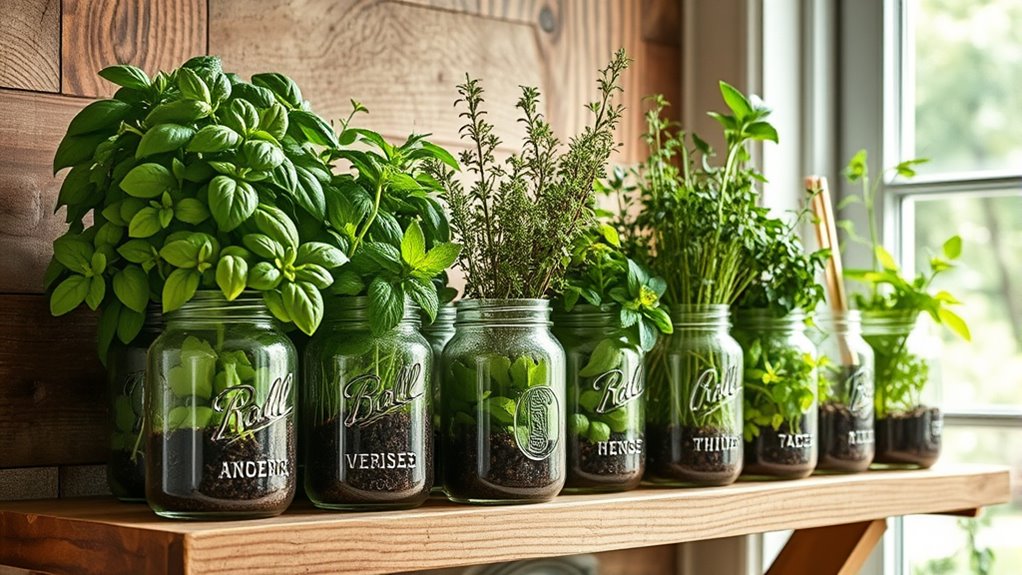
Creating an indoor herb garden with repurposed jars is an easy and eco-friendly way to bring fresh flavors into your home. It’s a simple project that transforms everyday glass jars into charming planters, giving new life to items you might otherwise toss out. Once you’ve gathered your jars and chosen your herbs, it’s essential to establish a consistent watering schedule. Herbs like basil, parsley, and mint thrive when their soil remains evenly moist but not waterlogged. Check your jars daily, and water only when the top inch of soil feels dry. Overwatering can lead to root rot, while underwatering stunts growth. Using a small watering can or a squeeze bottle allows you to control the amount of water, ensuring each plant gets just what it needs.
When it comes to pest control, keeping your herb garden healthy is key to preventing infestations. Repurposed jars are less susceptible to pests compared to traditional outdoor gardens, but indoor pests like aphids, spider mites, or fungus gnats can still pose a threat. To minimize issues, make sure your jars have proper drainage—adding small stones or gravel at the bottom helps prevent excess water from sitting in the soil. Regularly inspecting your herbs for signs of pests allows you to act early. If you notice any insects or sticky residue, gently wipe the leaves with a damp cloth or use a natural insecticidal soap. Avoid harsh chemicals, especially since these herbs are meant for culinary use.
Position your jars in a spot with plenty of indirect sunlight, such as near a south-facing window, to keep your herbs happy and vigorous. Proper lighting supports healthy growth and reduces susceptibility to pests. Additionally, maintaining good airflow around your jars can help prevent mold and fungal issues, which sometimes occur in humid indoor environments. Remember to prune your herbs regularly, removing dead or yellowing leaves, which can attract pests and promote better air circulation.
Frequently Asked Questions
How Do I Prevent Mold Growth in My Repurposed Jars?
To prevent mold growth in your repurposed jars, focus on proper jar cleaning and mold prevention techniques. Regularly wash your jars with hot, soapy water and make sure they dry completely before reusing. Avoid overwatering your herbs, as excess moisture encourages mold. Additionally, consider adding a layer of activated charcoal or sand at the bottom of the jar to absorb excess moisture. Consistent jar cleaning and moisture control keep mold at bay and your herbs healthy.
What Herbs Are Best Suited for Indoor Growing in Jars?
Ironically, the best herbs for indoor jars are those that thrive in confined spaces. You should pick herbs like basil, mint, parsley, and chives, which are known for their indoor compatibility. These herbs grow well in limited light and space, making them perfect for your repurposed jars. Their hearty nature guarantees you’ll enjoy fresh flavors without fuss, turning your small garden into a lush, aromatic haven.
How Often Should I Water Herbs in Small Jars?
For your small jars, you should water your herbs when the top inch of soil feels dry, usually every 2-3 days. Stick to a consistent watering schedule to prevent overwatering or underwatering, which are common issues in herb care. Check your herbs daily, especially in warm or dry conditions, and adjust your watering routine accordingly. Proper watering helps your herbs thrive and stay healthy indoors.
Can I Use Plastic Jars Instead of Glass for Safety?
Yes, you can use plastic jars instead of glass, but consider plastic safety and jar durability. Opt for BPA-free, food-grade plastics to guarantee your herbs stay safe to eat. Plastic jars are lightweight and less likely to break, making them more durable for indoor use. Just check that the plastic can handle water without degrading and avoid cheap options that might leach chemicals into your herbs.
How Do I Ensure Proper Drainage in Repurposed Jars?
To guarantee proper drainage in repurposed jars, start with a drainage layer like small stones or broken pottery at the bottom. Add a layer of activated charcoal to prevent odors, then fill with well-draining soil. Keep an eye on watering frequency—water only when the top inch of soil feels dry. This setup helps prevent waterlogging and promotes healthy herb roots.
Conclusion
By repurposing jars for your indoor herb garden, you breathe new life into everyday objects, turning them into symbols of growth and sustainability. Each jar becomes a vessel of possibility, reminding you that small acts can nurture big change. As your herbs flourish, so does your connection to nature and creativity. Your garden isn’t just about plants—it’s a symbol of renewal, resourcefulness, and the ongoing cycle of life.