
 By Kavita Mistry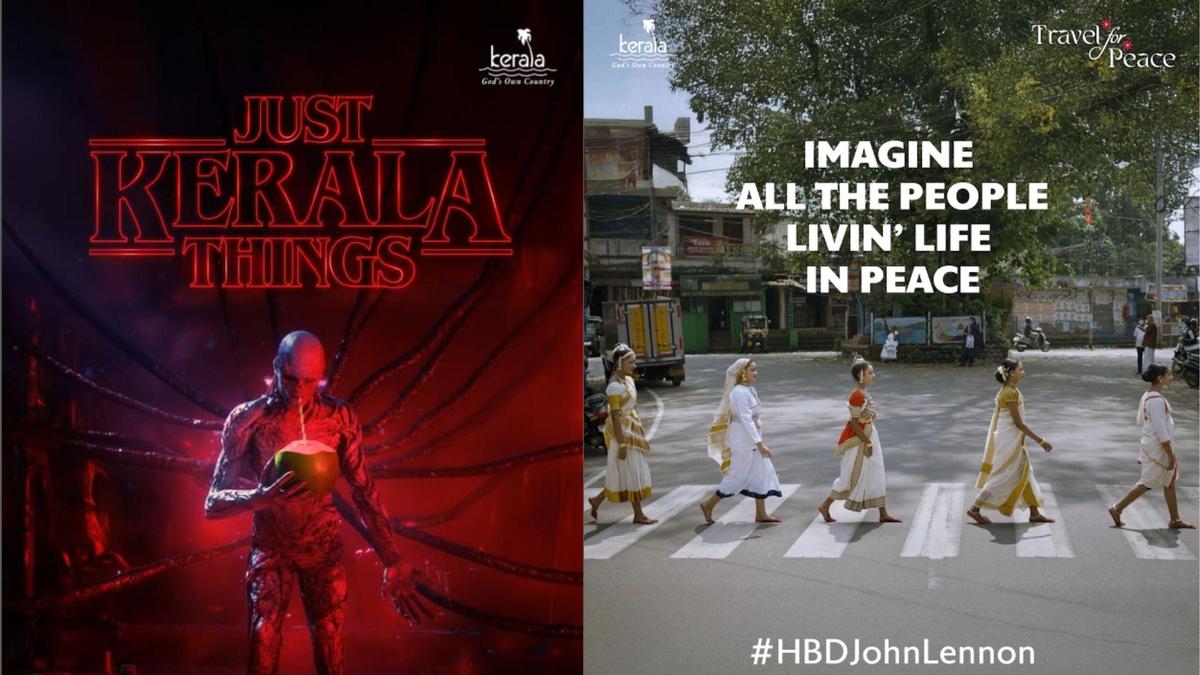
Think about this. What connects the late rock legend John Lennon, the Netflix series Stranger Things, and Kerala? Or Squid Games, Superman and Malayalis? While, at first, it may seem like nothing to us, Kerala Tourism thinks differently. And that has got Kerala Tourism the 2025 Pacific Asia Travel Association (PATA) Gold Awards for most engaging social media campaign.
Be it the Beatles’ iconic Abbey Road photo, Vecna from Stranger Things sipping coconut water, or the Superman whose kryptonite is Kozhikodan halwa — Kerala Tourism’s online persona has gone quirky, linking culturally relevant references with niche hyper-local instances.
Ajith Gopinath, National Creative Director at Stark Communications says, “Everyone is jumping onto the Stranger Things trend. As a brand, we don’t waste global anniversaries, pop culture events and so on. Our cultural radar, which is a team of youngsters, is always on. That’s how it happened. Once we spot a trend online, our team picks it up, and we work with it in such a way that it aligns with our brief, this is done within a day due to its timely nature.”

From Monalisa garbed in kasavu sari and mullapoo (a homage to the Malayali stereotype in the popular media) to Tanjiro Kamado from the anime series Demon Slayer, the campaigns are a result of combining cultural trends with Kerala’s culture, art, heritage, and experiences in imaginative, thoughtful formats.
“Our philosophy was very simple. We wanted to be emotionally truthful to the Kerala, but culturally current with the world,” says Ajit.
“Kerala tourism has cracked the formula, adapting global trends and localising it in such a way that it aligns with their brand’s identity,” says Geoffery Shocky, a creative planner at an advertising agency in Kochi, Kerala. “A few years ago, they posted an April fool’s day prank on its Instagram handle , which ‘showed’ Hollywood actors Tom Holland and Zendaya clicked at Munnar in Kerala. It was an edited photo and a prank which went viral. This was before AI, and thus brought a lot of attention to the page,” says Geoffery, who also points out how these campaigns, bring more attention to their pages where other content which is more about timeless aspects about Kerala such as its nature, culture, trade and so on.
Travel for peace
One of the Kerala Tourism’s recent popular campaigns was a homage to John Lennon, commemorating his 85th birthday, stating the lyrics of the 1971 track ‘Imagine’ — ‘Imagine all the people living life in peace’, with girls dressed in traditional wear often attributed to different religions, crossing the street — a re-enactment of the Abbey Road album cover.
The post was about weaving globally-recognised cultural icons into the State’s narrative of harmony, peace, and coexistence. “Such tributes went far beyond standard travel content, tapping into a shared cultural vocabulary that resonates across borders. The John Lennon post, especially, struck a deeper chord: the UK remains a major market for Kerala, and the Beatles are an enduring pillar of British pop culture. The reference felt natural, familiar, and instantly attention-grabbing,” says Roy Mathew, managing director and co-founder of Stark Communications Pvt Ltd
By leaning on universally relatable symbols, Kerala Tourism expands its audience, makes its messaging emotionally intuitive, and positions the State as a destination engaged in a wider global conversation, not just promoting places, but also participating in culture. An apt example for this instance would be, a popular post which came out in June featuring the characters Young‑hee and Chul‑su from the Korean series Squid Game, seen boating near the mangroves in Kerala, for a break.
The Travel for Peace campaign, a series of social media posts about welcoming guests to Kerala, positioning itself as a meeting point of identities, sent the message of reaching out to different cultures and travelling with intrigue, which might make the world a better place to live in. “The campaign was built on the belief that Kerala could be framed through a universal human value rather than any political lens,” says Roy.
At a time when brands stop making statements through their work and the world feels increasingly fractured, the “ad was a reminder that movement, discovery and human connection can soften divisions. By anchoring the narrative in peace, Kerala Tourism showed how a destination can speak empathy, healing and humanity, while remaining firmly above the political fray,” says Roy.