
 By Admin
Community-centered wellness involves engaging in social clubs, group therapy, and local activities that support your mental and physical health. These initiatives foster a sense of belonging, help you stay motivated, and make healthy choices easier to sustain. By participating in community gardens, fitness groups, or wellness workshops, you build stronger connections and resilience within your neighborhood. Keep exploring how these collective efforts can transform your well-being and create lasting support systems around you.
Key Takeaways
- Community-centered wellness integrates social clubs, support groups, and group therapy to foster emotional support and shared health goals.
- Local initiatives like health workshops and fitness groups promote collective engagement and healthy habits.
- Peer support systems in community settings enhance motivation, accountability, and mental health recovery.
- Group therapy and social clubs create safe spaces for sharing struggles, celebrating progress, and building camaraderie.
- Developing community spaces that facilitate group activities encourages sustained participation and overall wellness.
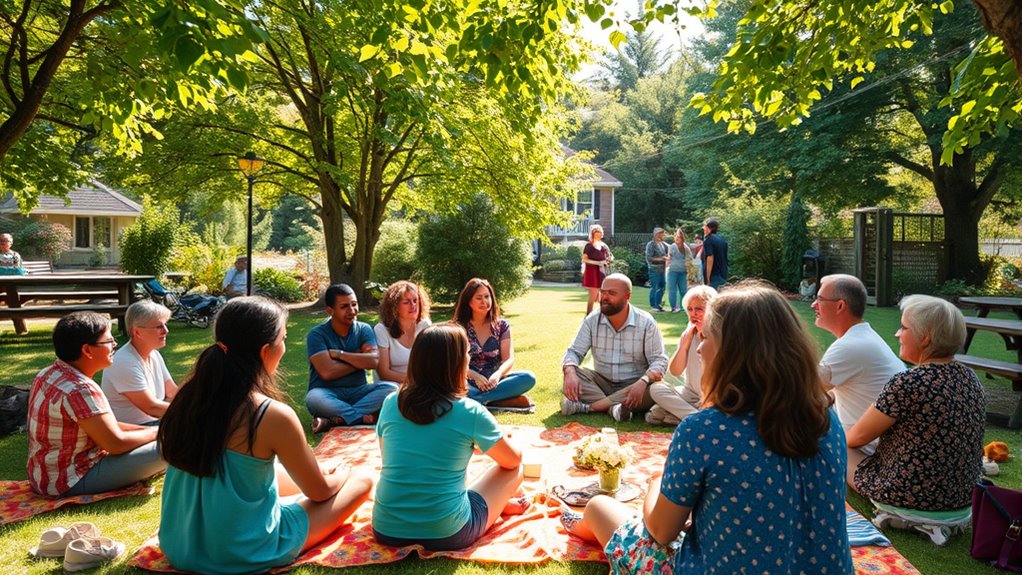
Have you ever wondered how a strong community can boost your overall well-being? When you’re part of a supportive neighborhood, you gain more than just a place to live—you tap into a network that encourages healthier habits, offers emotional comfort, and promotes collective resilience. Neighborhood support plays a crucial role in your mental and physical health because it creates a sense of belonging and safety. Knowing your neighbors are there for you reduces feelings of isolation and stress, which are common barriers to wellness. Furthermore, local health initiatives often emerge from these tight-knit communities, providing resources, education, and programs that make healthy living more accessible and achievable. These initiatives might include free vaccination clinics, fitness classes in the park, or mental health workshops, all aimed at fostering a healthier population. When you engage with neighborhood support and local health initiatives, you’re not just receiving help—you’re actively contributing to a culture of wellness that benefits everyone.
Participating in community-centered activities fosters connection and accountability, which can make it easier to stick with healthy habits. For example, joining a local walking group or a community garden project links you to others with similar goals. These interactions boost your motivation and help you stay consistent. Group activities like these also serve as informal support systems, where you can share struggles, celebrate progress, and exchange useful health tips. This collective effort can embolden you to prioritize your well-being, knowing you’re part of a larger movement toward shared health goals. Local health initiatives often serve as catalysts for these connections, organizing events or programs that bring people together around wellness. The sense of camaraderie that springs from these environments can considerably reduce feelings of loneliness, which research shows is a major factor impacting mental health. Additionally, understanding the principles of health behavior change can help communities design more effective programs that support lasting lifestyle improvements.
In addition, neighborhood support and local health initiatives can foster environments that make healthy choices easier. Community-led efforts might include creating safe parks for exercise or advocating for healthier food options in local stores. When communities rally around wellness, they create physical and social spaces that promote an active, health-conscious lifestyle. Your involvement might be as simple as attending a health fair or volunteering to run a wellness workshop. The more you engage, the more you’ll see how interconnected your well-being is with that of your neighbors. Ultimately, a community that prioritizes support and health initiatives creates a foundation for sustained wellness, making it easier for you to lead a balanced, vibrant life. So, lean into your neighborhood support networks and local health programs—they’re powerful tools to help you thrive.
Frequently Asked Questions
How Do Community Wellness Programs Differ Across Cultures?
You’ll notice that community wellness programs differ across cultures because they incorporate unique cultural practices and traditional beliefs. For example, some communities emphasize spiritual rituals, while others focus on collective activities rooted in local customs. These programs respect cultural values, making them more effective and inclusive. By understanding and integrating these cultural practices, you can foster stronger community engagement and promote holistic well-being tailored to each group’s beliefs and traditions.
What Are the Cost Benefits of Group Therapy Versus Individual Therapy?
You’ll find that group therapy offers notable cost efficiency, making mental health support more accessible. Shared expenses among participants lower individual costs, allowing you to get quality care without splurging. This approach maximizes resources and fosters a sense of community, which can enhance your healing process. Overall, group therapy provides a budget-friendly alternative that still delivers meaningful support, making it an excellent choice if you’re looking to save while prioritizing your well-being.
How Can Communities Address Stigma Around Mental Health?
You can address stigma around mental health by promoting stigma reduction efforts that include open conversations and education. Use cultural sensitivity to respect diverse perspectives and traditions, making mental health topics approachable for everyone. Encourage community leaders to share their experiences and create safe spaces where people feel comfortable seeking help. By fostering understanding and acceptance, you help break down barriers and normalize mental health care in your community.
What Role Do Local Leaders Play in Promoting Wellness Initiatives?
Think of local leaders as the lighthouse guiding community wellness efforts. They play a crucial role by fostering community engagement and encouraging open conversations about mental health. Through leadership development, they inspire others to participate in wellness initiatives, creating a ripple effect of support. Your community looks to these leaders to set a positive example, making mental health a priority and breaking down barriers with every step they take.
How Is Technology Integrated Into Community-Centered Wellness Programs?
You can integrate technology into community-centered wellness programs by leveraging digital platforms to connect members easily. Virtual support groups and online workshops make wellness accessible anytime, anywhere. These tools foster engagement, provide resources, and create a sense of community even when people can’t meet physically. Using technology, you empower individuals to participate actively, share experiences, and support one another, strengthening the overall wellness initiative within your community.
Conclusion
By embracing community-centered wellness, you create a supportive space where individuals thrive together. Imagine Sarah, who, after joining a local support group, found strength in shared stories and built lasting friendships. Her journey shows that collective efforts foster resilience and healing. When you participate in these groups, you’re not just improving your own well-being—you’re strengthening the entire community. Together, we can build healthier, happier lives through connection and support.